https://glownjoy.online/wp-admin/post.php?post=121&action=edit
Maybe you were on your way here, heading to work, running late, and stuck in traffic. Maybe you were at home paying your monthly bills or simply watching the 5 o’clock news.
It can be that simple. Unfortunately, the ten-billion-dollar self-care industry doesn’t want you to think that way.
The Self-Care Myth
Instagram posts and countless advertisements constantly reinforce the idea that self-care means a spa day, a pedicure and Prosecco, a weekend-long Netflix binge, or anything pumpkin-spice related.
Those indulgences can feel great, but they don’t necessarily qualify as self-care.
We often chase these picture-perfect self-care experiences, yet they don’t truly restore us. That leaves us with an important question: If those things aren’t self-care, then what is self-care, and how can we actually practice it?
What Really Causes Stress?
We experience stress through what we put into our bodies, what we put on our bodies, the thoughts we think, and the choices we make throughout the day.
Sugar, alcohol, excessive caffeine, and processed foods can all contribute to the stress we place on our bodies. These foods and drinks also rank among the most commonly consumed items in America.
When stress affects our immune system, energy levels, and emotional well-being, we need a self-care practice that works in the opposite direction.
Returning to Our Basic Needs
About a year ago, a workmate asked me about my wellness routine. She seemed almost embarrassed to ask.
I told her, “I only feed myself and sleep.”
I didn’t completely mean to brush her off, but my answer reflected how little attention I gave to my own needs.
My daily routine started with coffee and a pastry. Then I worked almost nonstop with barely any rest. At night, I watched shows or mindlessly scrolled through my phone.
I needed to change that routine.
The First Restorative Activities
I started by focusing on the basic things my body and mind needed.
I made more room for rest and began paying closer attention to what I put into my body. Instead of treating self-care as an occasional luxury, I started treating it as a daily practice.
Movement as Self-Care
The second restorative activity I added was movement.
You can walk, run, dance, practice yoga, or even do jumping jacks on your living-room floor. Our bodies need movement.
When we exercise, our bodies release endorphins. These chemicals can help us feel better and can also support better sleep, which naturally helps reduce stress.
You don’t need an expensive gym or a personal trainer. Those things can help, but you can start with something as simple as ten minutes of movement each day.
Spending Time in Nature
The last restorative activity I added was spending time in nature.
Research in environmental psychology suggests that spending time in nature can improve mood, reduce stress, and support cognitive function. The Environmental Protection Agency has also reported that people spend most of their time indoors, which means we have a huge opportunity to support our well-being simply by going outside.
We are creatures of nature, yet modern life often disconnects us from our natural environment. We can go days or even weeks without letting our bare hands or feet touch the ground.
What My Son Taught Me About Nature
My son is almost three years old, and he loves being outside.
If I let him, he would spend the entire day in the backyard or at the beach. When he goes outside, he doesn’t simply sit there. He rubs his hands in the dirt, touches leaves and trees, and catches frogs.
For the longest time, I couldn’t understand why his shoes never stayed on his feet for more than five minutes.
Maybe he was onto something.
The Idea of “Earthing”
People now use the term “earthing” to describe direct contact between bare hands or feet and the ground.
Some advocates claim that earthing can reduce inflammation and provide other health benefits, including lower stress, better sleep, and improved circulation. However, claims about these health effects require careful scientific evaluation.
Regardless of the debate around earthing, spending time outdoors can give us a valuable opportunity to slow down, move our bodies, and reconnect with our surroundings.
When my son spends most of the day outside, I notice that he naps, sleeps well, eats enthusiastically, and often seems calmer.
Small Habits Can Make a Difference
When we combine these activities and practice them consistently, we can create habits that support our mood, energy, and overall sense of well-being.
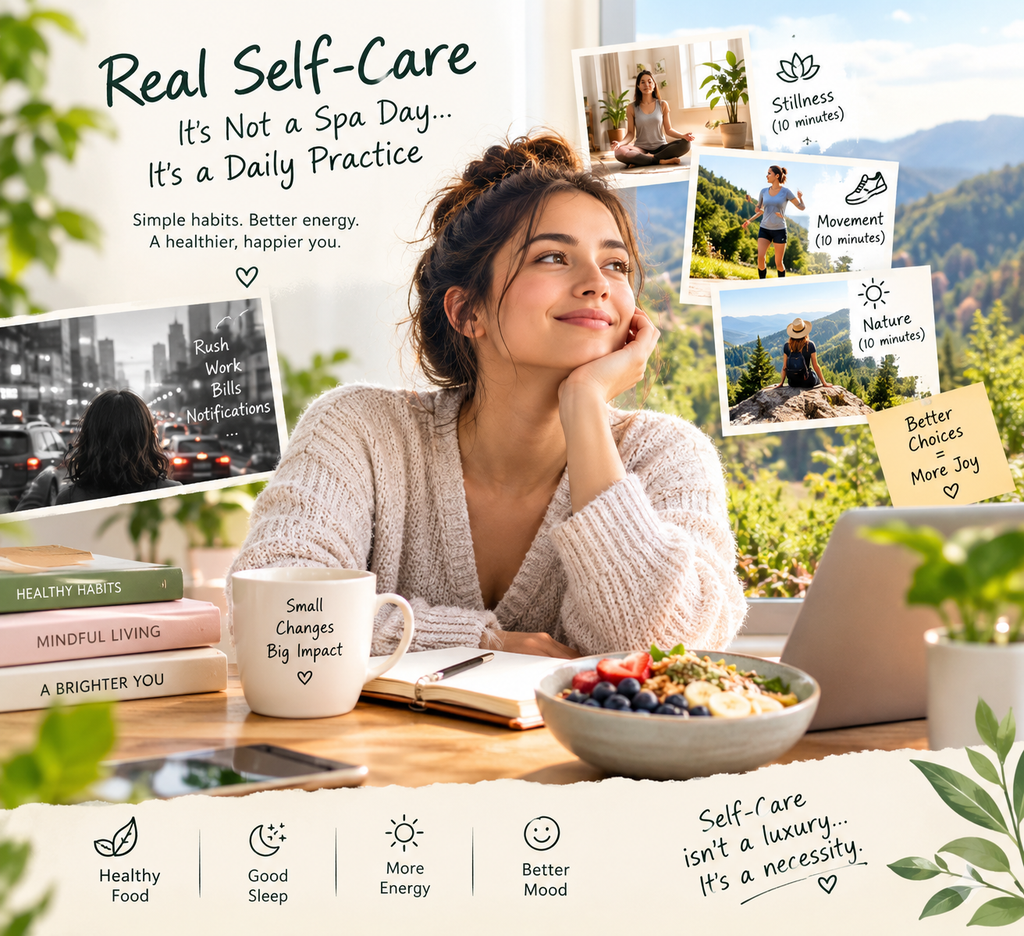
Imagine practicing self-care for just 30 minutes a day:
- 10 minutes of stillness
- 10 minutes of movement
- 10 minutes outdoors
Add those habits to a diet built around nutritious, whole foods, and you can create more than 180 hours of intentional self-care over the course of a year.
“But I’m Too Busy”
You might think, “I’m already so busy. Where will I find 30 minutes every day for self-care?”
Start by looking at how you already spend your time.
Many of us spend significant amounts of time watching television or scrolling through social media. You don’t have to completely eliminate those activities. Instead, you can reclaim a small portion of that time for yourself.
Ten minutes can become a walk. Ten minutes can become quiet reflection. Ten minutes can become time outside.
Small changes can add up.
Self-Care Means Showing Up for Yourself
Before you add another item to your never-ending to-do list, remember that self-care is a practice.
You don’t need to get it perfect. You don’t need to create the perfect self-care routine or post beautiful self-care photos on social media.
You simply need to show up for yourself each day.
Real self-care doesn’t always look luxurious or Instagram-worthy. Sometimes it looks like getting enough sleep, moving your body, eating nourishing food, stepping outside, or giving yourself a few quiet minutes without another demand competing for your attention.
That’s the kind of self-care that can become part of everyday life.
No Responses